Outdoor living spaces are evolving from simple functional areas into carefully designed environments that combine comfort, visual appeal, and practical use. Restaurants, hotels, resorts, and residential property owners are investing in outdoor spaces that support dining, relaxation, and social gatherings.
As a result, the fire pit has become more than a source of warmth. Its appearance, materials, dimensions, and flame presentation can influence the overall character of a patio, garden, or hospitality environment.
For outdoor living brands, distributors, and project developers, understanding fire pit design trends can help guide product selection and new product development. A successful product needs to balance aesthetics with practical considerations such as durability, safety, manufacturability, and the requirements of its target market.
Gardensun offers outdoor heating product categories that include fire pits, patio heaters, gas patio heaters, and pellet patio heaters. For businesses exploring new outdoor heating products, understanding the relationship between design trends and manufacturing requirements is an important step toward building a competitive product portfolio.
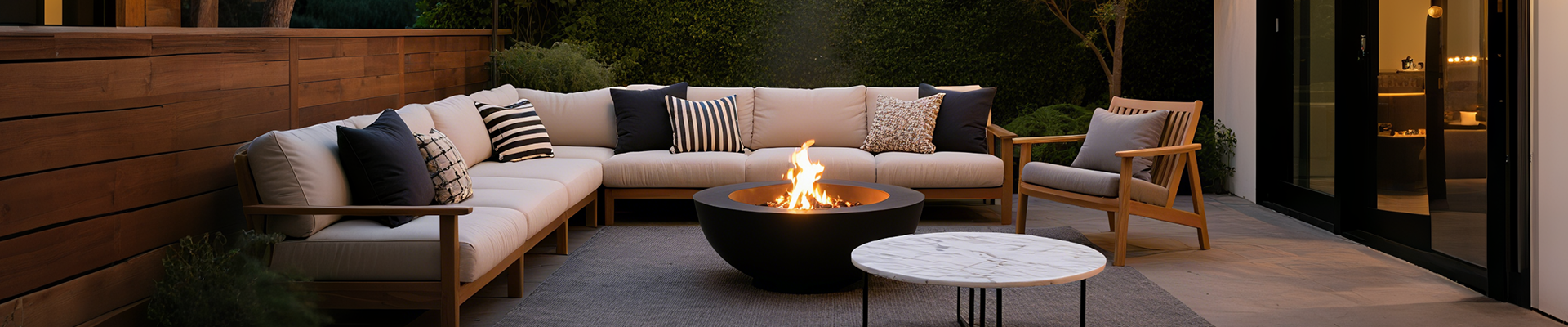
Modern outdoor spaces are increasingly planned as extensions of indoor environments. Outdoor dining areas, garden lounges, resort terraces, and residential patios are designed to support a variety of activities rather than serve a single purpose.
Within these environments, a fire pit can provide several functions:
Create a visual focal point
Contribute to the atmosphere of an outdoor gathering area
Complement furniture, landscaping, and architectural details
Provide a fire feature for suitable outdoor settings
For businesses developing outdoor living products, these functions create different design priorities. A residential product may emphasize compact dimensions and visual compatibility, while a hospitality project may require a consistent appearance across multiple units.
Understanding the intended application early helps manufacturers and buyers define the appropriate product specifications.
Minimalist design is a useful direction for brands serving customers who prefer contemporary outdoor environments. Clean lines, restrained detailing, and simple geometric forms can complement a wide range of furniture and architectural styles.
Depending on the product category, design approaches may include:
Cylindrical or geometric forms
Simple exterior structures
Neutral surface finishes
Reduced decorative detailing
Proportions suited to modern outdoor furniture
For brands and distributors, a cohesive appearance can help a fire pit fit into an existing outdoor living collection.
However, visual simplicity should not come at the expense of functionality. Product designers must still account for structural stability, heat exposure, access for cleaning, and the technical requirements of the selected fuel system.
Today's outdoor heating products need to satisfy both design expectations and functional requirements. A fire pit may look attractive in a product photograph, but its real-world suitability depends on how it performs in the intended environment.
Important design considerations include:
Flame presentation
The visibility and appearance of the flame can influence the atmosphere created by a fire pit. The design should match the intended product concept while following the manufacturer's operating and safety requirements.
Product proportions
The height, width, and overall footprint affect how the fire pit fits into seating arrangements and available outdoor space.
Ease of operation
Depending on the fuel system, buyers may prioritize straightforward ignition, accessible controls, or clear operating instructions.
Maintenance access
Designing for practical cleaning and inspection can make routine care easier for residential users and commercial operators.
For OEM projects, these requirements should be documented before samples are developed. A clear product brief helps align visual goals with engineering constraints and production feasibility.
Material selection plays an important role in fire pit design. Products may be exposed to rain, humidity, temperature changes, handling, and repeated heating cycles.
The appropriate material and finish depend on the product's construction, fuel type, intended operating conditions, and target price range.
When evaluating a fire pit, buyers should consider:
Structural suitability
The construction should support the product's intended use and remain stable under the conditions specified by the manufacturer.
Heat resistance
Materials and components must be appropriate for the temperatures and operating conditions associated with the product.
Surface protection
Finishes should be selected with the intended environment, appearance requirements, and maintenance practices in mind.
Long-term care
Manufacturers should provide clear information about cleaning, storage, inspection, and protection from environmental exposure.
For B2B buyers, it is useful to request material specifications and care instructions rather than relying on broad descriptions such as weatherproof or maintenance-free.
Outdoor living brands often need products that fit their own visual identity, customer expectations, and sales channels. Customization can help differentiate a product line when it is supported by a clear market strategy.
Depending on the manufacturer's capabilities and the product design, OEM or ODM development may involve:
Product shape and dimensions
Exterior finishes and colors
Selected structural or configuration options
Brand labels and packaging
Product manuals and market-specific documentation
Customization should begin with a clear understanding of the target customer. A product intended for a compact residential patio may have different size and design priorities from one intended for a resort lounge or a commercial outdoor project.
Buyers should also distinguish between cosmetic adjustments and changes that affect the product's structure, combustion system, stability, or safety. Technical changes require appropriate engineering review and validation.
Before production begins, both parties should agree on the approved sample, final specifications, quality criteria, and procedures for controlling design revisions.
Fire pit design is influenced by where and how the product will be used. The same appearance or configuration may not be suitable for every setting.
Residential buyers may prioritize visual compatibility, product dimensions, ease of maintenance, and suitability for the available space.
For brands serving this market, design options should be evaluated alongside fuel requirements, operating instructions, surface conditions, and the manufacturer's recommended clearances.
Restaurant projects often need products that complement seating layouts and the overall dining environment.
Procurement teams should consider the product's intended commercial use, placement requirements, cleaning procedures, and local rules governing open flames. A decorative fire feature should never be assumed suitable for a dining area without confirming these requirements.
Hospitality projects may require a coordinated appearance across multiple outdoor spaces or properties.
Design consistency, documented specifications, maintenance requirements, and repeat-order availability can all influence product selection. For larger projects, sample approval and written acceptance criteria can help maintain consistency across the order.
Sustainability is an increasingly relevant consideration in product development, but it should be evaluated through specific design and lifecycle factors rather than broad marketing claims.
For fire pits and other outdoor heating products, buyers may examine:
Material use and manufacturing waste
Product durability and expected maintenance
Repairability and availability of replacement components
Fuel requirements and operating practices
Packaging materials and shipping efficiency
Fuel consumption and emissions depend on the product design, fuel, operating conditions, and how performance is measured. A claim that one product is more sustainable or efficient than another should be supported by appropriate evidence.
For manufacturers, a lifecycle-oriented approach can help align product durability, serviceability, and material decisions with customer expectations.
Design trends influence more than a product's exterior. They can affect engineering decisions, tooling, material selection, assembly methods, inspection procedures, and production planning.
Manufacturers need to translate design concepts into specifications that can be produced consistently. This may involve reviewing dimensions, structural requirements, material choices, and the feasibility of proposed features.
Different finishes, dimensions, and configurations may require changes to production planning or sourcing. Buyers should clarify which options are already available and which would require new development.
The final product should be checked against agreed specifications. Depending on the design, inspection may cover dimensions, surface finish, assembly, stability, and relevant functional or safety requirements.
A documented approval process helps prevent differences between the agreed design and the finished production units. Buyers should confirm how samples, drawings, specifications, and subsequent changes will be managed.
These capabilities are particularly important for brands developing private-label products or coordinating repeat orders across multiple sales channels.
For brands, distributors, and project developers, selecting a manufacturing partner requires evaluating both design support and production reliability.
Relevant product experience
Review the manufacturer's experience with the specific type of fire pit and intended application.
Design and customization capability
Confirm which design options, engineering services, samples, and documentation the manufacturer can actually provide.
Material and quality management
Ask how material specifications, production inspections, finished-product checks, and corrective actions are handled.
Production planning
Discuss minimum order quantities, development timelines, production lead times, and the supplier's approach to repeat orders.
Safety and compliance documentation
Identify the destination market and determine which product standards, tests, labels, and instructions apply. Verify documents for the specific model and intended use.
Communication and change management
A clear process for reviewing drawings, approving samples, and confirming specification changes helps reduce avoidable production misunderstandings.
Comparing these factors provides a more reliable basis for supplier selection than evaluating a product on appearance or quoted price alone.
Gardensun's outdoor heating product categories include fire pits, patio heaters, gas patio heaters, and pellet patio heaters. These categories may be relevant to businesses developing outdoor living collections for residential, commercial, and hospitality applications.
For buyers exploring a new fire pit product, the first step is to define the intended market, application, preferred design, required specifications, estimated order volume, and relevant compliance requirements.
This information can help establish whether a proposed product concept is practical and clarify the customization and manufacturing support required. Specific claims about Gardensun's design services, production capabilities, and certifications should be confirmed against current company documentation before publication.
Fire pit design trends are shaping how outdoor living products are developed, positioned, and manufactured. Modern buyers may expect a combination of attractive appearance, suitable materials, practical operation, and customization options.
For outdoor living brands and B2B buyers, the challenge is to translate these expectations into products that are visually distinctive, technically appropriate, and commercially viable.
By defining the intended application, setting clear product specifications, and evaluating manufacturing capabilities carefully, businesses can make better-informed decisions when developing or expanding a fire pit product line.
Common design directions include minimalist forms, coordinated finishes, practical product proportions, application-specific customization, and greater attention to durability and maintenance.
Materials and finishes influence structural suitability, heat resistance, appearance, maintenance, and performance under the product's intended operating conditions.
Depending on the manufacturer's capabilities, OEM or ODM projects may include product dimensions, appearance, finishes, packaging, labels, and documentation. Changes affecting safety or combustion require appropriate technical review.
Businesses should define the target market, intended application, product dimensions, materials, fuel requirements, safety considerations, quality criteria, and expected order volume.
Buyers should review relevant product experience, engineering and customization support, material specifications, quality management, production planning, and applicable compliance documentation.
 EN