
 EN
EN
Selecting the right gas heater for your outdoor or indoor space is one of the most practical decisions you can make as a property owner, hospitality manager, or facility planner. With so many models available across different price points and form factors, the temptation is to choose based on aesthetics or price alone. However, the two most critical technical factors that determine whether a gas heater actually performs as expected are BTU output and coverage area. Getting these numbers right means the difference between a space that stays warm and comfortable and one that remains cold despite the heater running continuously.
Understanding how BTU output relates to coverage is not just a technical exercise — it is a practical framework that helps buyers avoid the common mistake of underpowering or overpowering a given space. A gas heater that is too weak for its environment will consume fuel inefficiently while delivering poor warmth. One that is overspecified for a small space may cause discomfort, safety concerns, or unnecessary fuel costs. This guide walks you through the key principles of BTU-to-coverage matching, the variables that affect your choice, and how to apply that knowledge to select a gas heater that truly fits your needs.
Understanding BTU Output in a Gas Heater
What BTU Means and Why It Matters
BTU stands for British Thermal Unit, and it is the standard measure of heat energy output used across the heating industry. When a gas heater is rated at a certain BTU level, that number represents how much heat energy it can produce per hour under optimal conditions. The higher the BTU rating, the more heat the unit generates, and — in theory — the larger the area it can effectively warm. However, BTU output alone does not tell the complete story, which is why pairing it with coverage area considerations is essential.
For outdoor gas heater applications, common BTU ranges fall between 30,000 and 50,000 BTU per hour for standard freestanding patio models. Smaller tabletop or wall-mounted variants may operate in the 10,000 to 25,000 BTU range, while commercial-grade or industrial gas heater units can reach 60,000 BTU or more. Understanding where your needs fall within these ranges is the starting point of any informed purchasing decision.
It is also worth noting that the BTU rating on a gas heater represents the maximum output capacity, not the continuous operating level. Many gas heater models include adjustable heat settings, which allow users to reduce output when full power is not needed. This flexibility improves both comfort and fuel economy, making adjustable BTU control an important feature to look for when comparing models.
How BTU Translates to Practical Heating Performance
The practical performance of a gas heater depends on more than its rated BTU. Environmental factors such as ambient temperature, wind speed, ceiling height, and the degree of enclosure all influence how effectively the heat energy reaches and warms the occupants of a space. An open-air rooftop terrace will dissipate heat far more rapidly than a semi-enclosed restaurant patio with windbreak panels, even if both spaces measure the same square footage.
Radiant gas heater models — which are the most common type for outdoor use — project heat in a directional cone or dome pattern rather than heating the air uniformly. This means that people and surfaces within the radiant zone feel warmth directly, while areas beyond it may remain cold. This radiant heating principle is efficient for targeted comfort but requires careful positioning and the right BTU specification to ensure adequate warmth reaches all intended occupants.
A useful rule of thumb used by many heating professionals is to allocate approximately 25 BTU per cubic foot of space for indoor applications, and to assume 40 to 60 percent efficiency loss for open outdoor environments. When working with a gas heater in a semi-enclosed outdoor space, somewhere between these two benchmarks provides a reasonable planning estimate. Always round up slightly to ensure your gas heater has enough reserve capacity on colder days.
Matching Coverage Area to the Right Gas Heater
Calculating the Coverage Your Space Requires
Coverage area, typically expressed in square feet or square meters, is the other half of the BTU equation. Most gas heater manufacturers provide a recommended coverage area in their product specifications, which represents the optimal heating zone under average conditions. For a standard 40,000 to 46,000 BTU outdoor gas heater, the typical stated coverage is between 150 and 200 square feet in a relatively sheltered setting.
To calculate your actual coverage requirement, begin by measuring the full dimensions of the space you intend to heat. For patios, restaurant terraces, or poolside lounges, measure the active seating or standing area rather than the entire property boundary. Then consider how enclosed the space is. A gas heater placed in a courtyard with three walls and an overhead canopy will cover far more effective square footage than the same unit placed in the center of an exposed outdoor deck.
If your space is particularly large, do not simply choose the highest-BTU gas heater available and assume it will cover everything. Instead, consider deploying multiple gas heater units distributed across the space at recommended intervals. This strategy provides more uniform warmth, avoids cold pockets at the edges of a single heater's radius, and allows you to activate only the units needed on less demanding days — saving fuel and reducing wear on each individual unit.
The Impact of Space Configuration on Gas Heater Selection
Space configuration plays a decisive role in gas heater selection that is often underestimated. A long, narrow patio will require a different placement strategy than a wide, open square terrace, even if both share the same total square footage. For elongated spaces, multiple gas heater units placed along the length of the area will outperform a single high-BTU unit placed at one end, which would leave the far end of the space underheated.
Ceiling height also factors significantly into gas heater performance. In taller indoor spaces such as warehouses, event halls, or covered markets, heat naturally rises and accumulates at the ceiling level rather than remaining at the occupant level. A gas heater used in these settings should either have a directional radiant output aimed at the people below, or the space should be partitioned with lower ceilings to prevent heat from escaping upward before it reaches occupants.
Outdoor windbreaks, pergolas, awnings, and glass enclosures can dramatically improve the effective coverage of any gas heater by reducing the convective loss of warm air. If your space includes or can be modified to include these structural features, you may be able to select a gas heater with a lower BTU rating without sacrificing comfort. This can reduce purchase cost, fuel consumption, and the physical footprint of the unit in your space.
Key Variables That Affect Your Gas Heater Choice
Climate and Seasonal Conditions
The local climate in which you plan to operate your gas heater is one of the most important determinants of how much BTU output you truly need. In regions where outdoor temperatures rarely drop below 50°F (10°C), a mid-range gas heater with 30,000 to 40,000 BTU will comfortably serve most residential patios and small commercial terraces. In colder climates where temperatures regularly fall into the 30s or below freezing, you should plan for a higher-output gas heater to compensate for the greater temperature differential.
Seasonal use patterns also affect the decision. If your gas heater will operate primarily in shoulder seasons — spring and autumn — your requirements will differ from a year-round usage scenario in a cold-climate region. For seasonal hospitality venues, sizing a gas heater for the coldest expected operational day ensures it will perform reliably throughout the season without struggling on peak demand nights.
Wind exposure is often more consequential than ambient temperature when it comes to gas heater performance outdoors. A breezy environment at 50°F can feel colder than a still environment at 40°F, and the effective coverage radius of a gas heater can be cut by 30 to 50 percent in high-wind conditions. If your space is wind-exposed, prioritize a higher BTU gas heater or invest in physical windbreak infrastructure alongside the heater.
Fuel Type and Operational Efficiency
Most outdoor gas heater models run on either propane (LPG) or natural gas. Propane units are portable and do not require connection to a fixed gas line, making them the most flexible option for residential patios, event spaces, and locations without existing gas infrastructure. Natural gas models are connected directly to a building's gas supply and are better suited for permanent installations where ongoing fuel management is a concern.
From an efficiency perspective, the fuel type does not significantly change the BTU output of a gas heater if the burner is properly calibrated for the fuel being used. What does change is fuel consumption rate and cost per BTU. Natural gas is generally less expensive per unit of heat produced in markets where it is widely available, while propane offers the advantage of portability and independence from utility infrastructure. Your choice of fuel type should align with the permanence of the installation and the practicality of fuel resupply.
Operational efficiency in a gas heater is also influenced by ignition system quality, burner design, and the reflector or emitter head that directs heat output. Premium gas heater models use stainless steel or aluminized reflectors that maximize radiant heat projection, reducing the amount of energy lost to upward or sideward dissipation. When evaluating gas heater options, look beyond the BTU rating and examine these construction details as they directly affect real-world performance.
Practical Selection Guidelines for Different Use Scenarios
Residential Patio and Garden Heating
For a typical residential patio or garden setting, a freestanding gas heater in the 40,000 to 46,000 BTU range offers a practical balance of heating power, fuel economy, and ease of use. These units are generally designed to cover an area of approximately 150 to 200 square feet under moderate conditions, which is sufficient for most private outdoor dining or lounging setups. Their freestanding design allows repositioning as needed, and most operate on standard propane cylinders that are easy to source and replace.
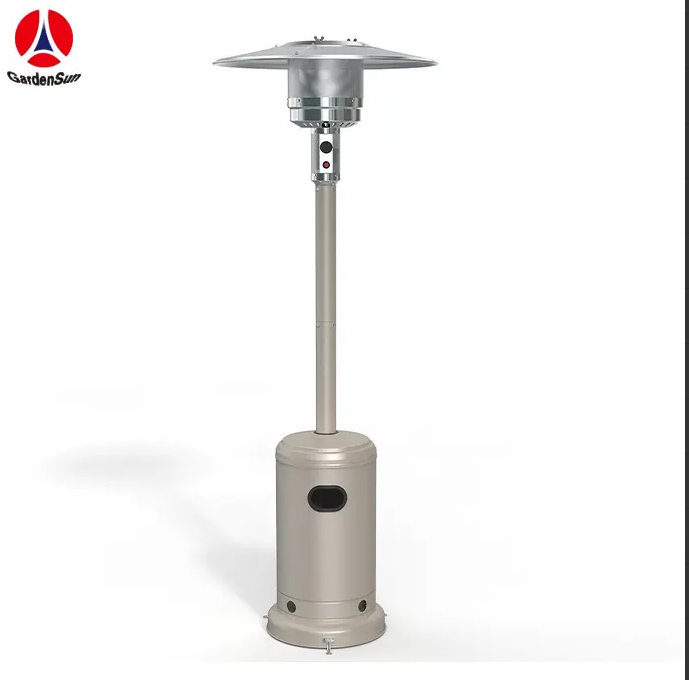
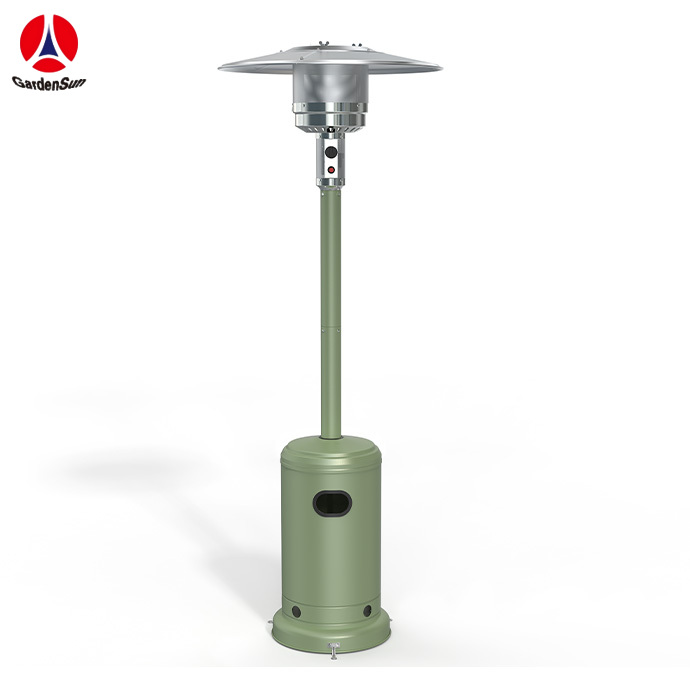
When choosing a gas heater for home use, also consider the aesthetics of the unit relative to your outdoor space. Many classic stand patio heater designs blend traditional and contemporary styles that complement garden furniture and landscaping without appearing industrial. Stability is another consideration — select a gas heater with a weighted base or anti-tilt safety features, especially in households with children or pets, or in areas prone to wind gusts.
For smaller residential balconies or compact terraces, a tabletop gas heater in the 10,000 to 15,000 BTU range may be sufficient. These compact models heat a much smaller zone — typically 60 to 80 square feet — but they are highly portable, easier to store, and consume less fuel. They are well-suited for intimate gatherings or single-household use where a full-size gas heater would be excessive.
Commercial and Hospitality Heating Applications
In commercial settings such as restaurant terraces, hotel courtyards, event venues, or brewery taprooms, the gas heater selection process requires a more systematic approach. Commercial operators typically need to heat larger aggregate areas, maintain consistent warmth across multiple occupied zones, and operate the equipment reliably through extended service hours. This demands gas heater models with higher build quality, more robust ignition systems, and validated performance specifications.
For a typical commercial outdoor dining area of 400 to 600 square feet in a semi-exposed setting, a deployment of two to four gas heater units in the 40,000 to 46,000 BTU class — positioned at equal intervals across the space — generally delivers satisfactory results. The exact number depends on enclosure level, ambient climate, and how densely the space is occupied during peak service periods. For very large commercial terraces, a heating design consultation with an HVAC or outdoor comfort specialist may be warranted before committing to a gas heater configuration.
Commercial gas heater purchases should also account for durability and serviceability. Stainless steel construction resists corrosion in outdoor environments, especially coastal locations. Easy-access pilot systems and replaceable burner components reduce downtime during a busy service period. Investing in a higher-quality gas heater upfront typically results in lower total cost of ownership over a multi-season operational timeline.
FAQ
How many BTUs does a standard outdoor gas heater produce?
Most standard freestanding outdoor gas heater models produce between 40,000 and 46,000 BTU per hour at maximum output. Smaller tabletop models typically range from 10,000 to 25,000 BTU, while commercial or heavy-duty units can reach 60,000 BTU or more. The right BTU level depends on the size of your space, its level of enclosure, and your local climate conditions.
How much area can a 40,000 BTU gas heater cover?
A 40,000 BTU gas heater can typically cover approximately 150 to 200 square feet in a reasonably sheltered outdoor setting under moderate temperature conditions. In more exposed, windy, or colder environments, effective coverage may be reduced by 30 to 50 percent. Adding windbreaks or choosing a more sheltered location can help maximize the effective coverage of the same gas heater.
Should I choose propane or natural gas for my gas heater?
The choice between propane and natural gas depends on your installation type and infrastructure. Propane gas heater models are portable and do not require a fixed gas line, making them ideal for residential patios and temporary installations. Natural gas models connect to a permanent supply line and are better suited for fixed commercial installations where ongoing propane cylinder management is impractical. Both fuel types deliver comparable BTU output when the burner is calibrated correctly.
Can I use a single gas heater to heat a large open commercial patio?
In most cases, a single gas heater is not sufficient to adequately heat a large commercial outdoor area. Large open spaces require multiple gas heater units distributed at regular intervals to provide uniform warmth across all occupied zones. Using several mid-range units rather than one oversized gas heater also gives operators greater flexibility — units can be activated selectively based on occupancy levels, saving fuel on quieter service periods.